


On this page
When gums recede, the necks of the teeth become exposed: teeth look longer, react to cold and touch and are more prone to decay at the root. Plastic gum surgery – also called gum recession treatment or recession coverage – can often cover exposed root surfaces again, fully or in part. Dr. M.Sc. M.Sc. Martin Jaroch, Master of Science in Periodontology and Implant Therapy, plans and carries out these procedures at our practice in Singen.
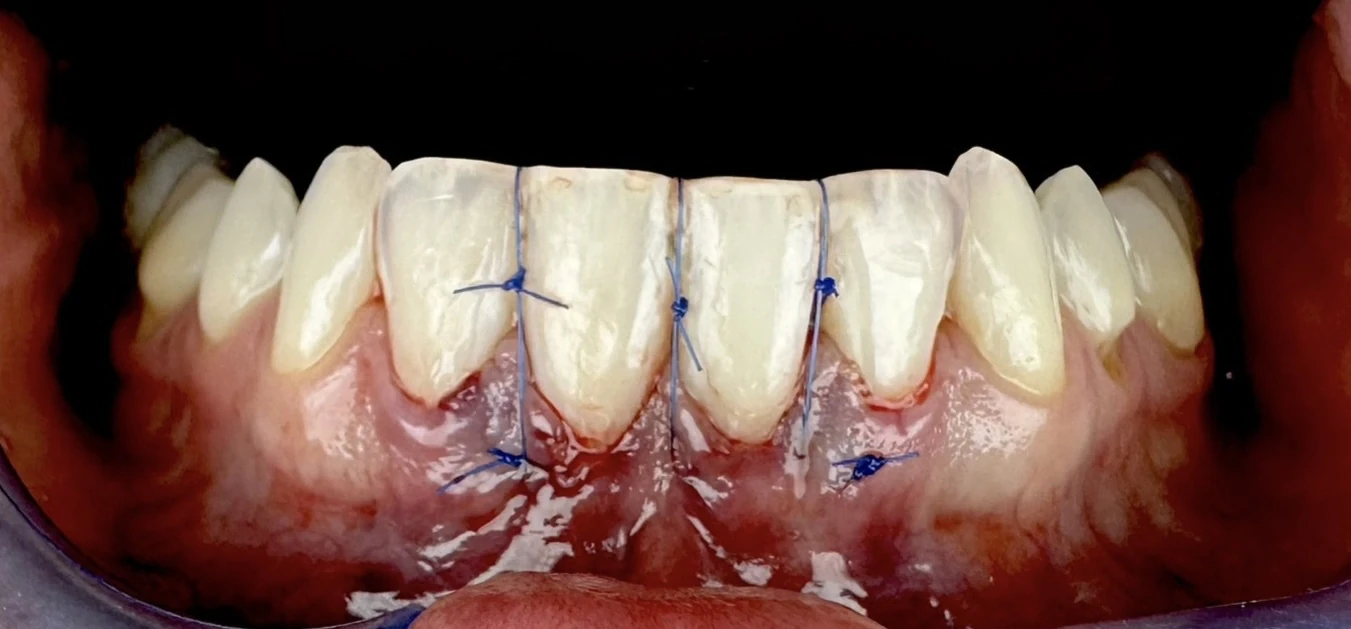
Gum recession: causes and consequences
With gum recession, the gum line recedes and parts of the tooth root become visible. Common causes are:
brushing too hard or with the wrong technique
periodontitis
misaligned teeth and strain from grinding or clenching
thin, delicate gum tissue
lip or tongue piercings
genetic factors
The consequences range from sensitive tooth necks and a higher risk of root decay to an uneven gum line that makes a smile look older. Not every recession needs surgery. Whether treatment makes sense is decided after a thorough examination.
Recession coverage: treating gum recession
Recession coverage aims to cover exposed root surfaces with gum tissue again and to strengthen the tissue. Treatment can make sense when:
exposed tooth necks cause discomfort
the recession is progressing
there is a higher risk of root decay
cleaning the area has become difficult
there are aesthetic reasons in the visible area
Around implants, or before and during orthodontic treatment, it can also make sense to strengthen thin gum tissue. The earlier a recession is treated, the smaller the procedure usually is.
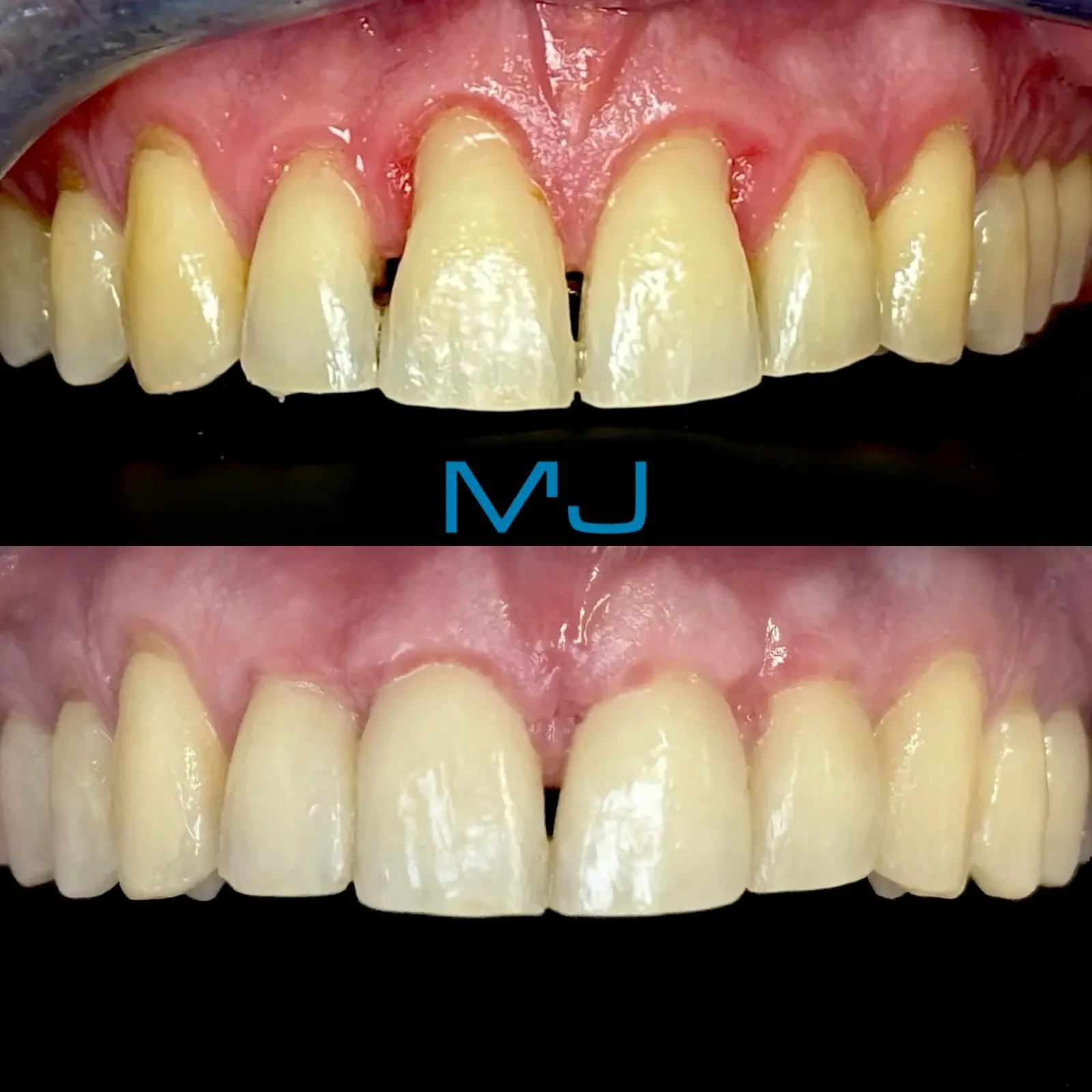
Treatment steps
Examination and consultation: we assess your gum type, oral hygiene, tooth position and personal risk factors and discuss options, limits and alternatives.
Preparation: any existing gum inflammation is treated first; professional teeth cleaning often comes beforehand.
Procedure: under local anaesthesia the gum is moved with microsurgical techniques (a repositioned flap) or strengthened with a connective tissue graft from the palate. Where your own tissue cannot be used, substitute materials are an option.
Healing: initial healing takes about one to two weeks, the tissue stabilises over six to twelve weeks, and the final result can take several months.
Check-ups: in the weeks after the procedure we check how the area is healing and adjust your oral hygiene.
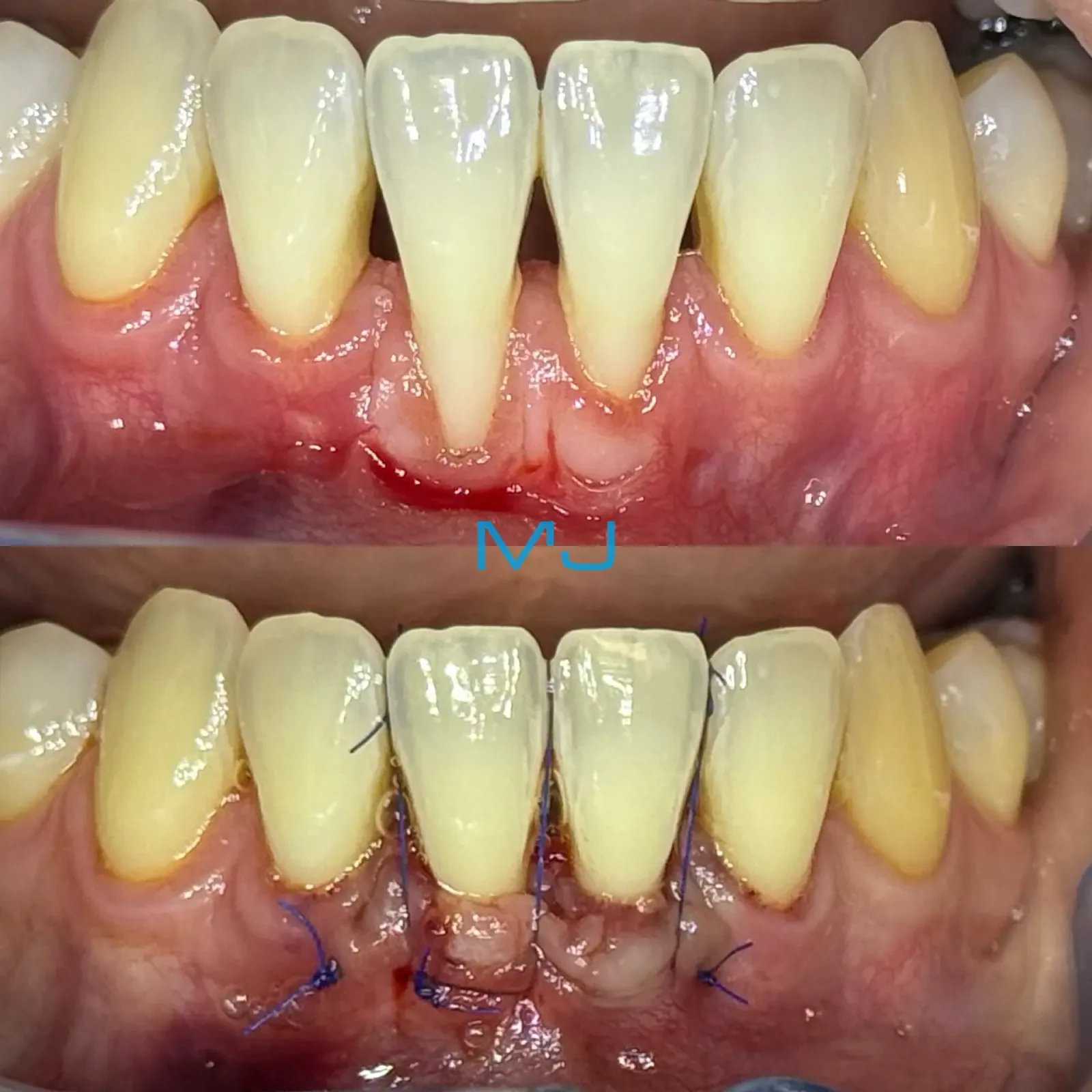
As with any surgical procedure, swelling, bleeding, pain or temporary sensitivity can occur. Complete root coverage cannot be guaranteed – we discuss beforehand which result is realistic in your situation.
Costs of plastic gum surgery
The costs depend on how many teeth are treated, which technique is needed and whether, for example, a graft is taken from the palate. Whether and how much your insurer contributes depends on your insurance and policy; for patients with German statutory health insurance, recession coverage often has to be paid for privately. Before treatment you receive a written cost estimate. Read more under costs and billing.
Frequently asked questions about gum recession treatment
Is gum recession treatment painful?
The procedure is carried out under local anaesthesia. Mild to moderate discomfort afterwards is normal; take painkillers as we advise.
When can I brush again?
Do not brush the treated area until we tell you to. Keep cleaning your other teeth gently with a soft toothbrush.
Can I smoke after the procedure?
Avoid smoking and alcohol, especially in the first days, as both interfere with healing and can worsen the result.
How is this different from treating periodontitis?
Periodontitis treatment fights the inflammation of the tissues supporting the teeth. Recession coverage rebuilds gum tissue that has been lost – usually only once the gums are free of inflammation.
You will find more answers in our FAQ on gum recession. For a personal assessment, book an appointment via our contact form.