

On this page
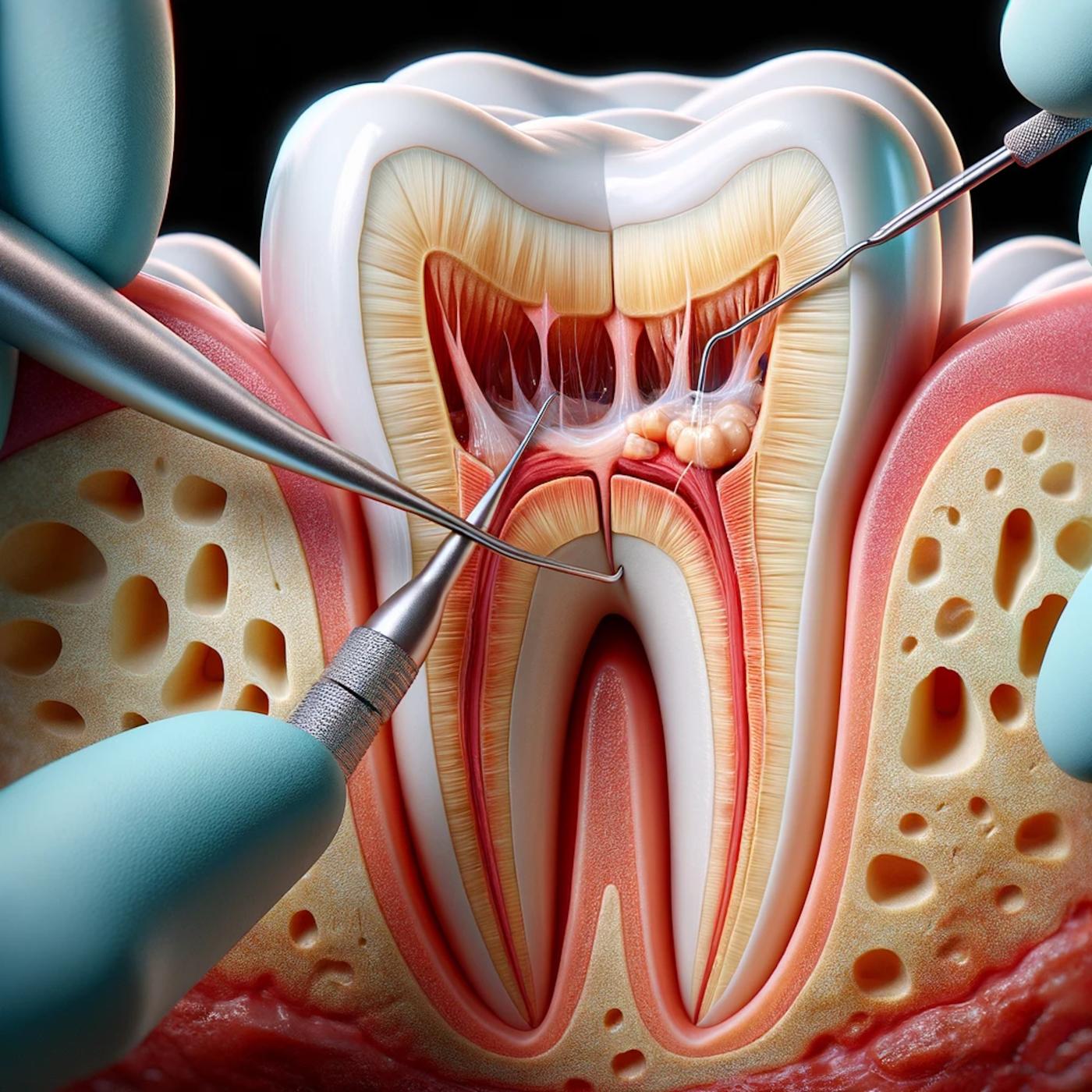
Even when the nerve has already died, root canal treatment (endodontics) can often save the tooth. We remove the inflamed tissue from inside the tooth, clean and disinfect the root canals and seal them tightly against bacteria. At our practice in Singen we work with modern methods, so that you keep your own tooth for as long as possible.
When is root canal treatment needed?
Bacteria can reach the dental pulp through deep decay, leaking fillings or cracks. Typical signs are:
severe or throbbing toothache, also at night
lasting sensitivity to heat or cold
pain when biting
swelling of the gum or cheek
a grey discolouration of the tooth
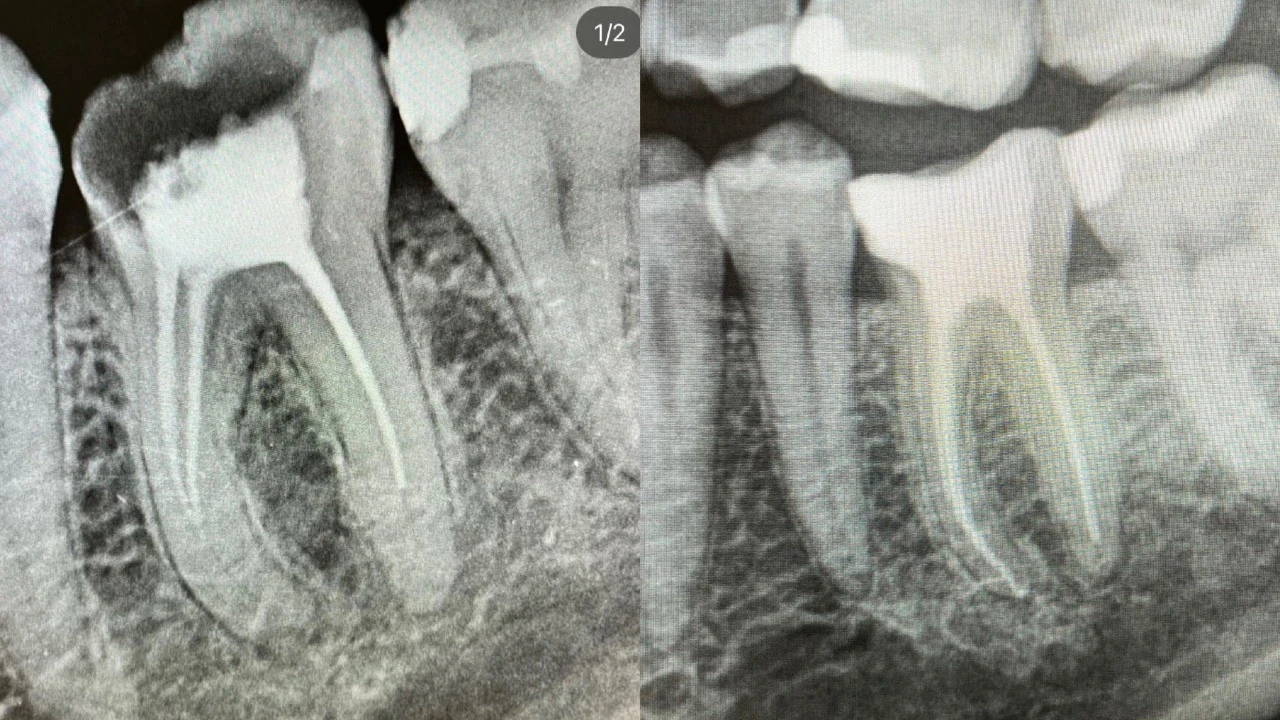
Sometimes the inflammation causes no symptoms at all and only shows up on an X-ray. Left untreated, it can spread into the jawbone and lead to an abscess.
Why saving the tooth is worth it
Root canal treatment removes the cause of the pain and stops the inflammation from spreading. The saved tooth keeps your bite stable and prevents neighbouring teeth from drifting or being overloaded. This often avoids the need for an implant, a bridge or a denture.
Treatment steps
Diagnosis: we examine the tooth and assess it on an X-ray.
Anaesthesia: the tooth is numbed locally, so treatment is usually painless.
Opening and cleaning: we open the tooth, remove the inflamed tissue and shape the canals mechanically.
Length measurement: we determine the length of the canals by X-ray or electronically, so they can be cleaned and filled right to the tip of the root.
Disinfection: antibacterial rinsing solutions reduce bacteria, including in fine side canals.
Filling and restoration: the canals are dried and sealed. The tooth is then restored permanently with a filling or a crown.
Depending on the findings, one or more appointments are needed. A slight feeling of pressure after treatment is normal and usually fades within a few days.
Root canal retreatment
If a tooth that has already had root canal treatment causes symptoms again or shows inflammation on an X-ray, retreatment can help: the old root filling is removed and the canals are cleaned, disinfected and filled again. Reasons include canals that were missed or bacteria that entered through a leaking filling. Retreatment takes more work than the first treatment, but it addresses the actual cause and is therefore often preferable to an apicoectomy.
Costs and health insurance
German statutory health insurance covers root canal treatment if the tooth is considered worth saving, and pays for the basic treatment: simple cleaning and filling of the canals. Additional methods such as electronic length measurement, rotary canal preparation or activated rinsing are not included and are usually paid for privately; the crown afterwards is often partly paid for privately. We discuss beforehand which services make sense for your tooth, and you receive a written cost plan. Read more under Costs & billing.
Frequently asked questions about root canal treatment
Does root canal treatment hurt?
Thanks to local anaesthesia, treatment is almost always painless. Afterwards the tooth may be tender to pressure for a few days.
Does a root-filled tooth need a crown?
Often, yes. After treatment the tooth is weaker, and a crown protects it from fracturing.
How long does a root-filled tooth last?
With careful treatment and a tight restoration it can last for many years or decades. Regular check-ups help to spot problems early.
You will find more answers in our questions about root canal treatment. If you have acute toothache, our emergency page will help you further.