


On this page
Today most adults think of clear aligners first when it comes to braces. Even so, fixed braces are the more reliable choice for some treatments – and with tooth-coloured brackets they are much less noticeable than many people expect. At our practice in Singen we discuss openly with you which brace suits your tooth position, your gums and your daily life.
When fixed braces make sense for adults
Fixed braces work around the clock, whether or not you remember to wear them. This can be an advantage when:
certain tooth movements are achieved more reliably with brackets
a pronounced bite problem needs correcting, possibly in combination with jaw surgery
you know that wearing aligners for 20 to 22 hours a day would be difficult in your everyday life
teeth need to be moved precisely into position for a crown, a bridge or an implant
In some cases we combine both methods: first individual movements with brackets, then fine-tuning with aligners – or the other way round. Read more about the alternative under Invisalign® for adults, and the overall picture under Braces for adults.
Which brackets are an option?
Ceramic brackets: tooth-coloured ceramic brackets are barely noticeable in conversation. They cost somewhat more than metal.

Metal brackets: robust, proven and the most affordable option. A good solution for adults for whom appearance matters less.
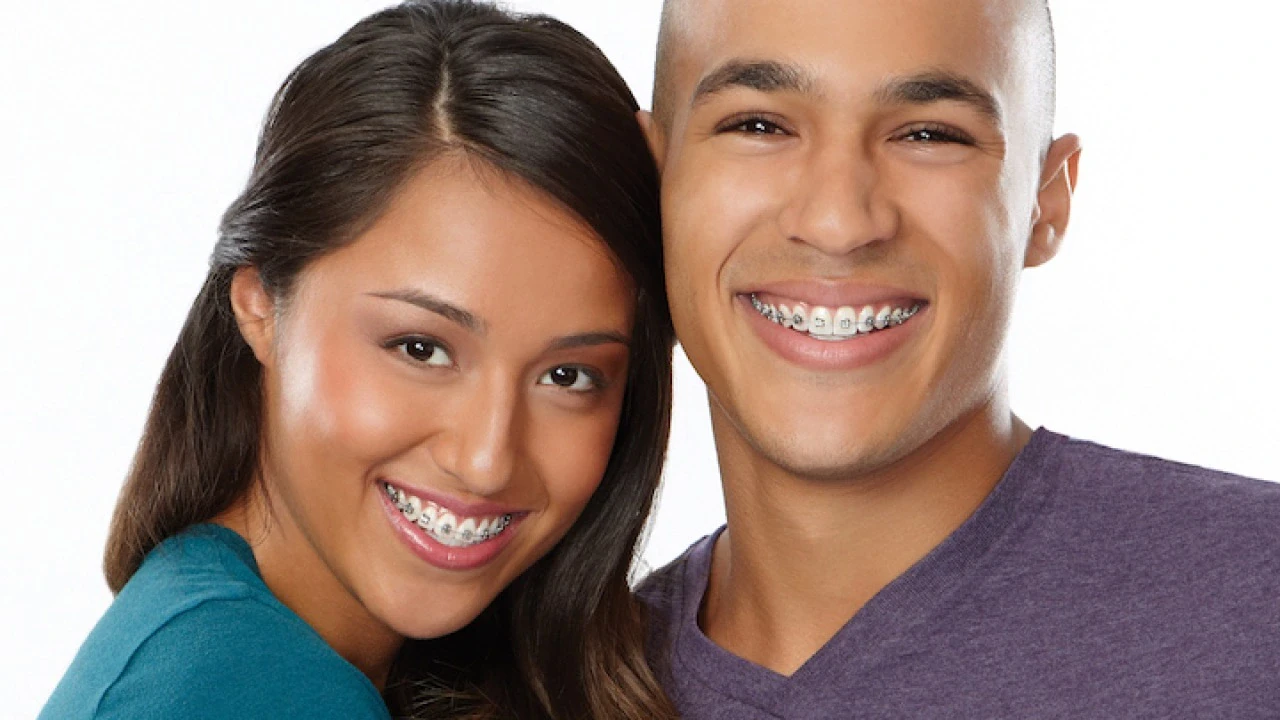
Self-ligating brackets: in these systems a small clip holds the wire instead of an elastic ring. Whether this brings advantages in your case, we discuss at the consultation.
Lingual braces: brackets on the inside of the teeth cannot be seen from the outside. Today many adults choose clear aligners instead. We are happy to advise you on lingual braces as well – including in comparison with Invisalign®.
Gums and oral hygiene: especially important for adults
Plaque builds up more easily around brackets and wire. For adults whose gums may already have been inflamed or have receded, this matters more than for teenagers. That is why at our practice:
Before braces: we examine the gums and bone. If periodontitis is present, we treat it before any brackets are bonded – see Periodontology.
During treatment: we show you how to clean around the brackets with interdental brushes and a suitable toothbrush. Regular professional teeth cleaning during treatment is advisable.
In planning: Dr. Jaroch, Master of Science in orthodontics and in periodontology and implant therapy, plans forces and movements to protect the gums and bone. How orthodontics, periodontology and implant dentistry work together is described in the POI360° concept.
Detailed cleaning tips are in our FAQ on braces.
How treatment works
Consultation and diagnostics: 3D scan, photos, X-rays if needed, examination of gums, bite and jaw joints.
Treatment plan: we discuss the goal, type of bracket, expected duration and costs; you receive a written treatment and cost plan.
Fitting: the brackets are bonded to the cleaned teeth and connected with the first wire.
Check-ups: at regular intervals we check progress and change or adjust the wire. If you travel a long way, we schedule appointments further apart where this is medically appropriate.
Removal and retention: after the brackets are removed, we polish the teeth and fit a retainer so that the result stays stable.
Everyday life with fixed braces
In the first days after fitting, many people feel pressure on their teeth; soft food helps. Lips and cheeks usually get used to the brackets within one to two weeks – until then, orthodontic wax protects sensitive spots. For contact sports we recommend a mouthguard. Avoid very hard and sticky foods so that no brackets come loose. What to do if a bracket does come off or the wire pokes is explained under Orthodontic emergencies.
How long does it take?
How long treatment with fixed braces takes depends on the starting point; smaller corrections are quicker. This is followed by the retention phase, which lasts much longer than active treatment. We discuss duration and costs after the diagnostic work-up.
What do fixed braces for adults cost?
For adults with German statutory health insurance, fixed braces are generally a private service; the insurer pays only in exceptional cases, for example in combination with jaw surgery. Costs depend on the type of bracket, the extent of the tooth movements and the length of treatment, and are billed according to the German fee scale for dentists (GOZ). Private and supplementary insurance reimburse depending on the policy – please submit the treatment and cost plan in advance. More under Costs & billing; for patients from Switzerland under Dentist for Swiss patients.
Frequently asked questions about fixed braces for adults
Can people see ceramic brackets?
Up close, yes; in normal conversation they are not very noticeable because they take on the colour of the teeth.
Fixed braces or Invisalign® – which is better?
There is no general answer. It depends on which tooth movements are planned and how well aligners fit into your daily life. After the diagnostic work-up we explain why we recommend which option.
Does fitting hurt?
In the first days after fitting – and after every wire change – a feeling of pressure or tension is normal; it usually eases after a few days.
Can I have fixed braces if I have had periodontitis?
Often yes, once the inflammation has been treated. We discuss with you how we look after your gums during treatment.
Request an appointment: request your consultation online – on working days we usually reply within 24 hours.