

On this page
A tense jaw in the morning, worn tooth edges, a click when you open your mouth: many people grind or clench their teeth at night without noticing. Often a partner notices it first – or we do at a check-up, because the teeth show the traces.
At our practice in Singen, we examine whether your teeth, your jaw muscles or your jaw joint are affected. Depending on the findings, we protect your teeth with a custom-made night guard or treat jaw joint and muscle problems as part of functional therapy, for example with a Michigan splint.
Teeth grinding (bruxism): how to recognise it
Grinding and clenching usually happen unconsciously, during sleep or at tense moments during the day. Possible signs include worn tooth edges, a tense jaw or headaches and jaw pain in the morning, and noises at night that someone else notices. We discuss at the examination whether your symptoms are related to it.
The causes vary – stress and tension, sleep disturbances, bite discrepancies or certain medications are among them. A single cause cannot always be found. Our FAQ on night guards gives an overview.
TMD: when the jaw joint and muscles are involved
TMD stands for temporomandibular disorder (in German “CMD”). We discuss possible signs such as clicking in the jaw joint, pain in the jaw muscles or limited mouth opening at the examination.
Headaches can have many causes. We check at the examination whether there is a link to your teeth and jaw; persistent symptoms should also be checked by a doctor.
Examination and diagnostics
We start with a detailed conversation about your symptoms: how long you have had them, when they occur and which medications you take. You can fill in our digital patient questionnaire beforehand. We then examine:
Teeth and jaw joint: we look for signs of wear on your teeth and examine your jaw joint.
Your bite: with the iTero intraoral scanner we see, digitally and in colour, how your teeth meet and where bite discrepancies are. Comparing with earlier scans shows whether tooth wear is changing. More about our equipment under diagnostics.
X-rays, if they are needed for the assessment.
Night guard or Michigan splint?
Both splints are custom-made for you, but they have different aims:
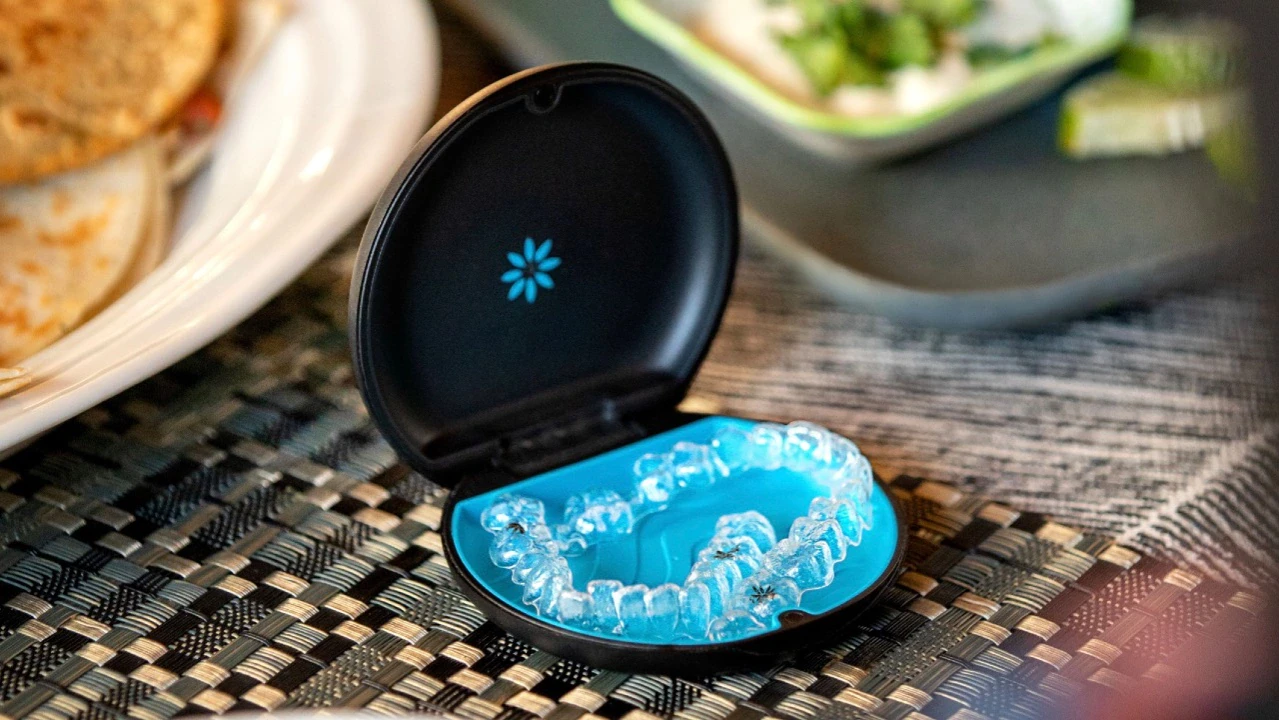
A night guard (also called a bite splint) mainly protects the teeth. It prevents teeth, fillings, crowns or implants from being worn down or overloaded by grinding and clenching.
A Michigan splint is a hard upper-jaw splint made in the laboratory and precisely adjusted to your bite. It is part of functional therapy and is mainly considered for jaw joint and jaw muscle problems.
Which splint makes sense for you is decided after the examination. Worth knowing: a splint protects your teeth and can relieve the jaw joint and muscles – it does not treat the cause of grinding. Detailed answers on the differences, wearing time, care and durability are in our FAQ on night guards and Michigan splints.
Treatment in 5 steps
Conversation and examination: we examine your teeth, jaw muscles and jaw joints and discuss the findings with you.
Scan or impression: we record your teeth with a scan or an impression.
Fabrication in the laboratory: the splint is made to match your individual bite.
Fitting and fine adjustment: we fit the splint, fine-tune it and explain when and for how long to wear it. It is usually worn at night.
Check-ups: we agree with you when we check the fit and your bite.
When further assessment is needed
We discuss with you whether further steps alongside the splint make sense, such as physiotherapy. If your symptoms point to other causes, we recommend a medical assessment.
Please contact us straight away if you suddenly cannot open or close your mouth properly, if swelling appears or if the pain is severe. More under emergencies.
Grinding, restorations and implants
Clenching at night can overload crowns and implants; a splint protects them. See dental prosthetics and implantology.
What does a night guard or Michigan splint cost?
The cost depends on which examinations are needed and which splint is suitable. Whether and to what extent your health insurer contributes depends on the findings and your insurance – we clarify this with you before treatment starts. You receive a written treatment and cost plan or cost estimate in advance, which you can submit to your insurer.
Privately insured patients receive an invoice under the German scale of dental fees (GOZ); how much is reimbursed depends on the plan. Patients from Switzerland will find information on getting here, billing and documents on our page for patients from Switzerland. More under costs and billing.
Frequently asked questions
How do I know whether I grind my teeth at night?
Often you don’t notice it yourself. Signs include a tense jaw in the morning, worn tooth edges or noises someone else hears. At the examination we can see signs of wear on your teeth.
Do I have to wear the splint forever?
How long you wear the splint depends on the findings. At check-ups we discuss whether anything has changed and how to proceed.
Can a splint cure TMD?
A splint can relieve the jaw joint and muscles and protect your teeth. Because TMD can have various causes, treatment sometimes includes further steps, such as physiotherapy. A particular result cannot be predicted.
Does a splint help with headaches?
Morning headaches or jaw pain can be linked to clenching at night – but they have many possible causes. We check at the examination whether there is a link to your teeth; persistent headaches should also be checked by a doctor.
Advice on teeth grinding and jaw problems in Singen
Do you suspect you grind your teeth, or is your jaw joint giving you trouble? Request an appointment – we take the time to look at your teeth, muscles and bite and discuss the next steps with you.